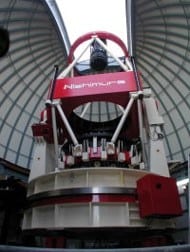
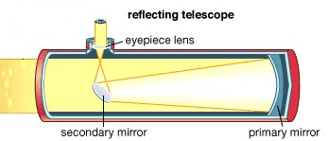
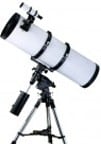
These types of telescopes use visible light (optical) to view distant objects. Refracting telescopes use lenses to collect and focus light, but are very expensive and heavy. They do provide a sharp, detailed image, however. Reflecting telescopes use mirrors to focus light, and since they are very cheap to make they are usually much larger. The larger the objective mirror, the more light collected and a sharper image is given. Both these telescopes are limited to visible light, and so can only be used at night time. The major issue with these telescopes is that the images are affected by the Atmosphere.
Radio Telescope
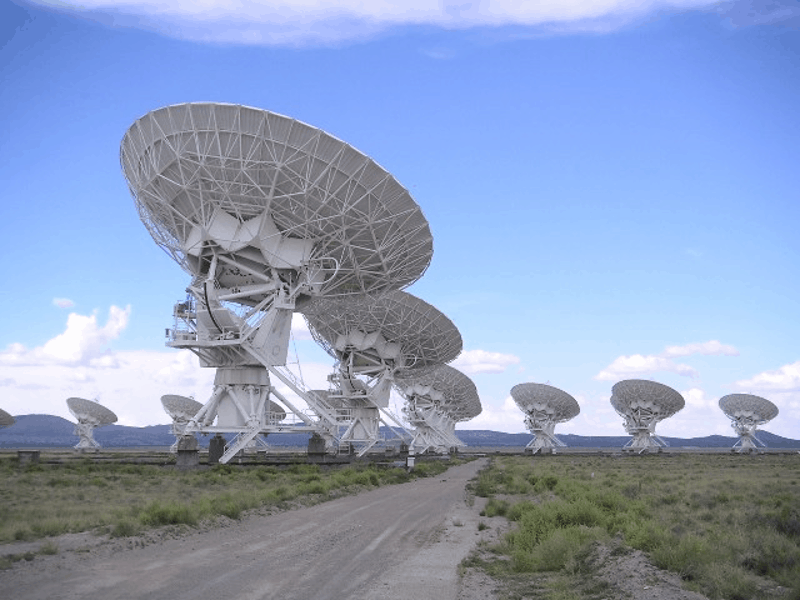
Radio telescopes pick up radio waves instead of light waves. These are much longer and so give good clear, signals. These telescopes need very large antennas and dishes that need to be set up on a large, permanent site. Radio waves are emitted by most bodies in space, so the telescope uses a parabolic dish to reflect the waves to a receiver, which detects and amplifies the signal. They do not rely on light and so can be used 24 hours a day, and can also detect gases that are not visible to the human eye.
X-ray telescope
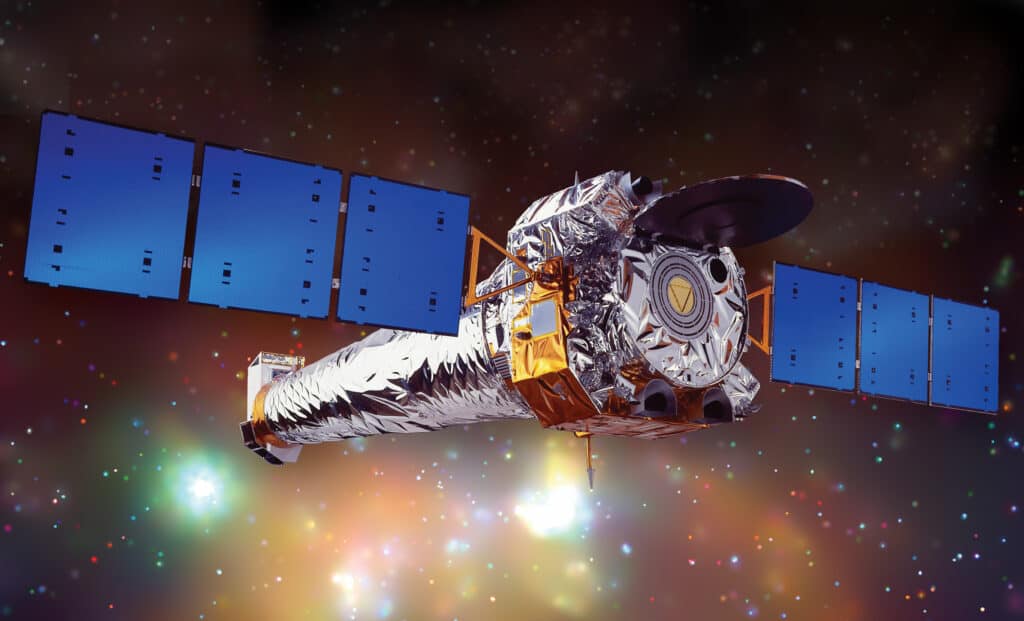
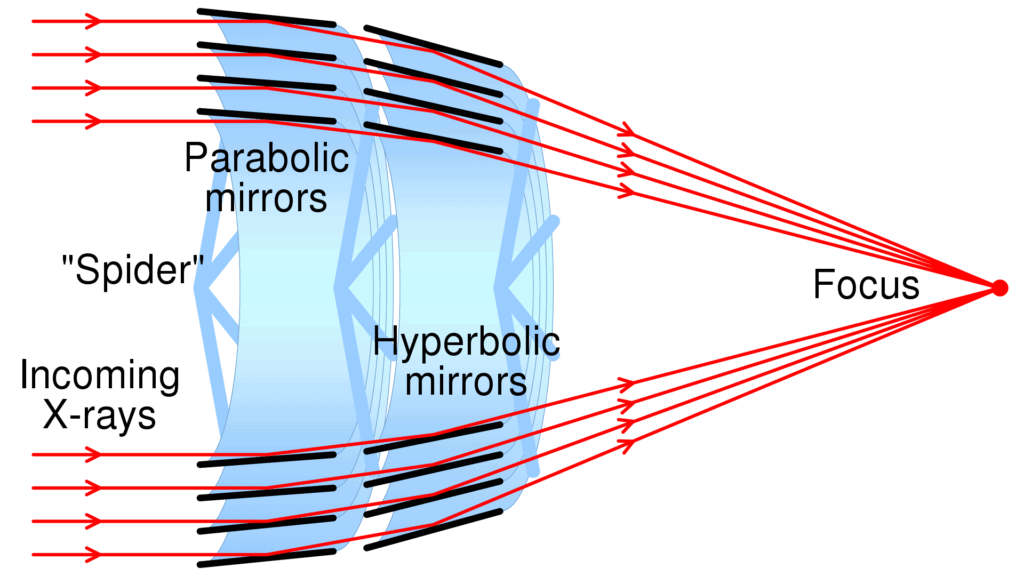
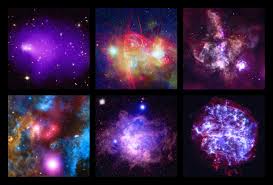
X-ray telescopes can see high temperature explosions in space, but can only be used when placed in space because the Earth’s atmosphere will absorb X-rays. Having telescopes in space is expensive to set up, as well as to repair and maintain. The Chandra X-Ray Observatory is among the recent satellite observatories launched by NASA, and by the Space Agencies of Europe, Japan, and Russia. Chandra has operated for more than 10 years in a high elliptical orbit, returning thousands of images and high-resolution spectra of all kinds of astronomical objects
Infrared Telescope
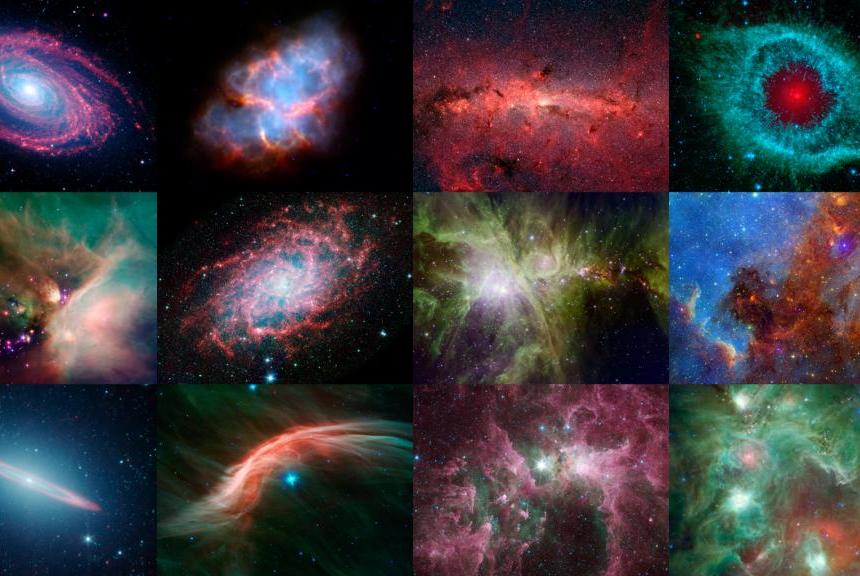
An infrared telescope is a telescope that uses infrared light to detect celestial bodies. Infrared light is one of several types of radiation present in the electromagnetic spectrum.
All celestial objects with a temperature above absolute zero emit some form of electromagnetic radiation.