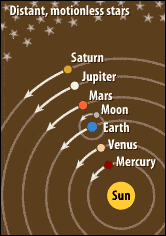
Our solar system is made up from the planets, stars including the sun, the moons of planets, asteroids, meteroids and comets. Beyond our Solar System are the other solar systems and stars that make up our galaxy called the Milky Way.
The sun is the centre of our solar system. It is our closest star and that is why it looks so big compared to the other stars we can see in the sky. We now know all of the planets rotate around the sun, this idea was not always what we believed, it wasn’t until the 16th Century when Nicolaus Copernicus when he suggested that the other planets did not rotate around the Earth but around the sun.
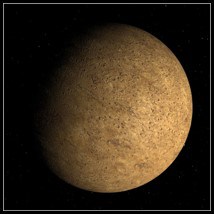
Mercury is just a little bit larger than Earth’s moon. The surface of Mercury that faces the Sun can reach about 800 degrees Fahrenheit in the day and -300 at night. This is because Mercury has little to no atmosphere. Mercury can complete one orbit around the Sun in only 88 Earth days. That’s just about 3 months here on Earth. Mercury has no moons
Venus
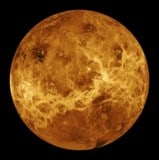
Venus lies much closer to the Sun. The atmosphere effectively traps the Sun’s energy causing the surface to burn much hotter than it naturally would. The temperatures on Venus can reach almost 900 degrees Fahrenheit (approx. 482 degrees Celsius). For Venus to travel around the sun it takes less time than here on earth as one year is 224 days.
Earth
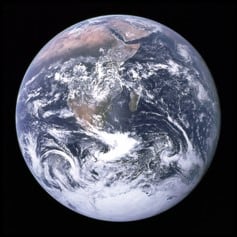
The average temperature on Earth is about 13 oC. Highest recorded has been 56.7 oC and lowest -89 oC. It takes 365.25 days to go around the Sun. The Earth has 1 moon.
Mars
The temperature is typically about -63 oC. However on the equator of Mars it may occasionally reach temperatures of up to 30 -40 oC. Mars rotates at about the same rate as the earth, so one day one mars lasts about 24 hours. For Mars to travel around the Sun it takes more time than here on Earth as one year is 686 days. Mars has two moons
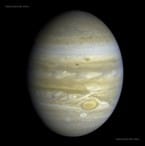
Jupiter
Jupiter has a vast range of temperatures. The outermost layers are exposed to the very low temperature of space, while the centre of the planet has very high temperatures. The average temperature on Jupiter is -121,5 °C. Jupiter rotates faster than Earth and one day is only 9.8 hours. It takes Jupiter longer to travel around the Sun, it takes 4332 days. Jupiter has 50 moons
Saturn
The temperatures below Saturn’s clouds are much higher than those at the top of the clouds. The temperature at the top of Saturn’s clouds averages -285° F (-175 °C). The core of Saturn is much hotter, estimated at around 11,700 °C. Saturn rotates faster than Earth and one day is only 10 hours. It takes Saturn longer to travel around the Sun, it takes 10,759 days Saturn has 53 moons
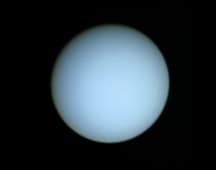
Uranus
The temperature would vary depending on where in the atmosphere you measured it. The minimum temperature is -224 °C (-371 °F). Uranus rotates faster than Earth and one day is only 17.2 hours. It takes Uranus longer to travel around the Sun, it takes 30,684 days. Uranus has 27 moons
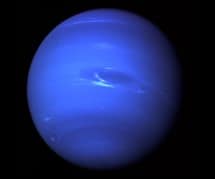
Neptune
The temperatures around the cloud tops can reach a chilly -360 °F. The planet’s center can reach 9032 °F. The average temperature is -328 °F. One of the poles is about 10 degrees warmer than the rest of the planet. This is from the constant exposure to the sun. The hot spot changes poles as the planet rotates. Neptune rotates faster than earth and one day is only 16.2 hours. It takes Neptune longer to travel around the Sun, it takes 60,384 days. Neptune has 13 moons