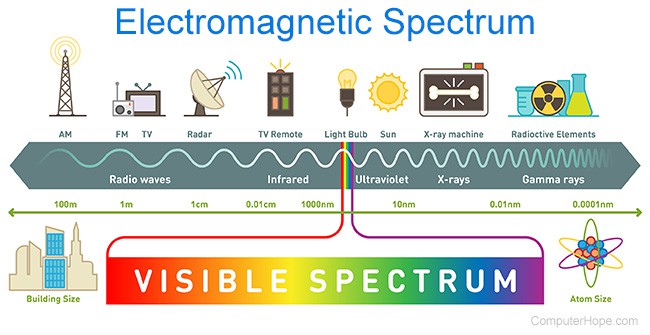
The uses of the different electromagnetic waves are dependant upon their wavelength.
This lesson we are going to look at visible light, infrared, microwaves and radio waves – the long waves.
You can see in this picture that radiowaves have the widest waves (longest wavelength) and the fewest (low frequency). Gamma rays have the closest together waves and lots of them this means a high frequency (number) and a short wavelength.
Visible Light
The part that our eyes can detect- allowing us to see.
Light bulbs are designed to emit visible light.
Cameras can also detect it and record images
Infrared
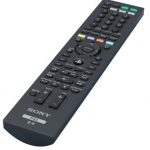
Short range communication- between computers in a room or from a remote control to the TV.
Optical fibres- send information long distances.
Grill/toaster- transfer energy to the food, which absorbs it and heats up.
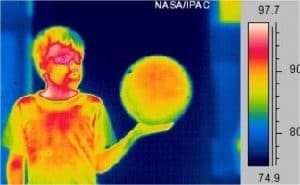
Thermal imaging- show how much heat is given off by different objects.
Security Systems- sensors that detect IR or infrared beams and detectors that set off alarms when someone breaks the beam.
Microwaves
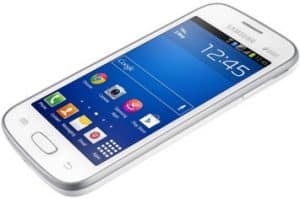
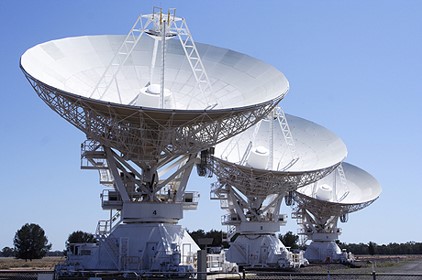
Communication- satellite transmissions and mobile phone signals.
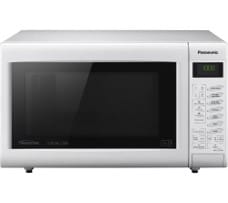
Microwaves- transfer energy to food, heating it up inside.
Radiowaves
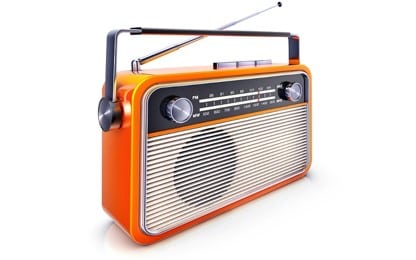
Communication- transmitting radio broadcasts or TV programmes. Can be sent via satellite with controllers on the ground communicating with spacecraft using radio waves.