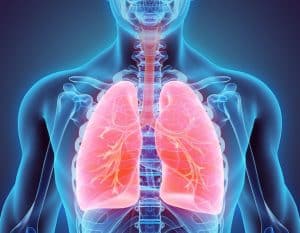
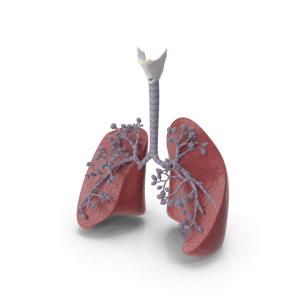
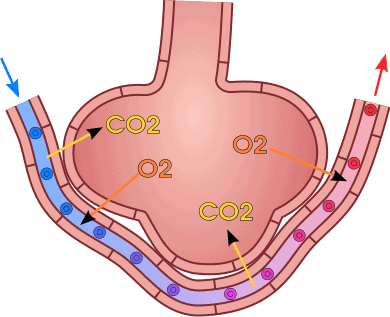
The main organ of the respiratory system is the lungs., This is where gas exchange takes place. Oxygen from inhaled air is taken from the lungs into the blood. At the same time carbon dioxide from our blood diffuses into the lungs ready to be exhaled. Air is taken in through the nose and mouth and moves down the windpipe or trachea. From there it it branches into bronchi and then into bronchioles before ending in alveoli.
Alevoli
Lungs have a large surface area to volume ratio as they have to exchange carbon dioxide and oxygen.
The lungs are packed with millions of alveoli which give the lungs a larger surface area. This makes gas exchange as efficient as possible.
Alveoli also have a very good blood supply through a netork of capillaries. This means that oxygen and carbon dioxide can diffuse quickly.
Diffusion
Diffusion is the method by which carbon dioxide and oxygen move between the alveoli and blood. This is also what happens in leaves if you recall the photosynthesis topic, when we learnt about rates of reaction and states of matter and also in digestion. Diffusion is the movement of particles from an area of high concentration to an area of low concentration. The analogy we have used before is spraying perfume in the corner of the classroom. Eventually the smell fills the room because the particles are moving.
Surface Area to Volume Ration
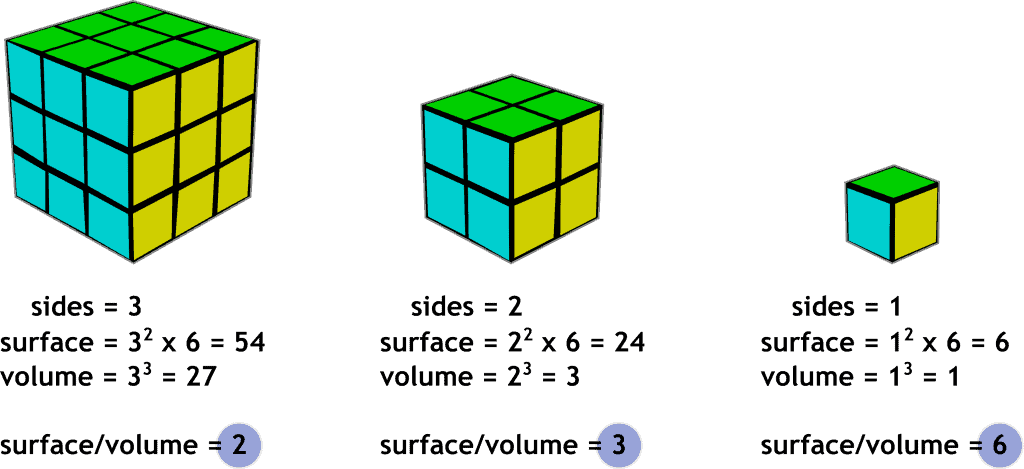
Surface area to volume ration is important in living things. We have looked at surface area in rates of reaction, we know that if we made something into smaller pieces it reacted quicker e.g. the marble chips or the sugar cubes. In the human body, places where diffusion occurs have large surface area to volume rations to make the process as efficient as possible e.g. in the intestines and in the lungs.
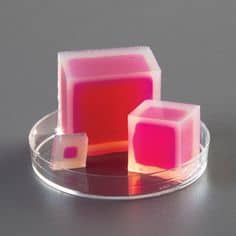
In class we would carry out an experiment using iodine and potatoes with different size cubes to see the difference in how far the dye can travel. The picture on the left is similar, you can see that the dye travels almost all the way into the small cube but not very far into the big cube. If this was a cell needing oxygen, the big cell would not be getting enough. The bigger a cell gets the smaller the SA:V ratio, if the ratio is too small a cell cannot get enough raw materials fast enough to carry out the processes it needs.