Enzymes are special molecules that help with chemical reactions. They help to speed them up so are called catalysts. In digestion they help with reactions like breaking down nutrients from the food we eat so that they can be absorbed.
How do they work?
Enzymes have a 3D shape with a specially shaped area called an ACTIVE SITE. The substance that they react with is called a SUBSTRATE. The enzyme and the substrate work like a lock and a key, each enzyme is specific to a certain substance. For examples proteins from our food are broken down into amino acids by the enzyme protease.
Carbohydrates are broken down using a group of enzymes called carbohydrases. Enzymes work fastest at an optimum pH and temperature.
Enzyme Activity
Changes in temperature , pH or substrate concentration can change how fast an enzyme reacts.
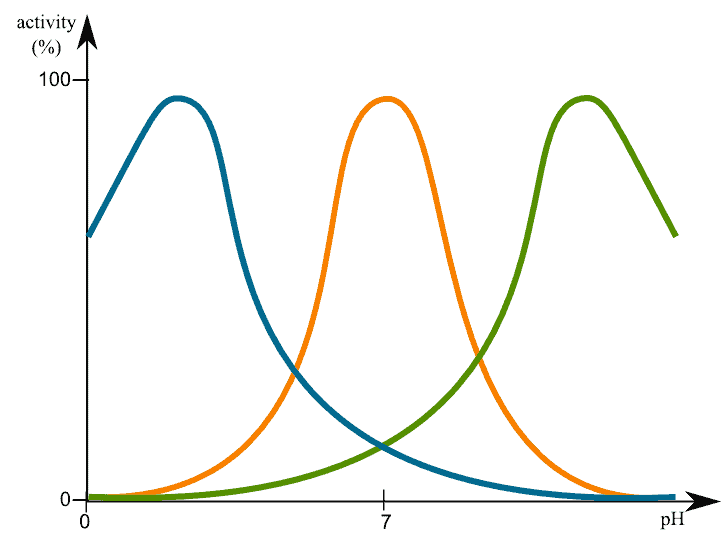
If the pH is not at the correct level the shape of the active site changes shape. This is called being denatured. Because the shape no longer matches the shape of the substrate they do not fit together and can no longer work. This also happens when the temperature is too high. The graphs below show how fast reactions happen. The temperature graph shows that the optimum temperature is around 40oC this is similar to normal body temperature. After this point the activity drops because the shapes no longer fit.
The pH graph has 3 lines as different digestive enzymes work at different pHs however the shape of the graph is similar.