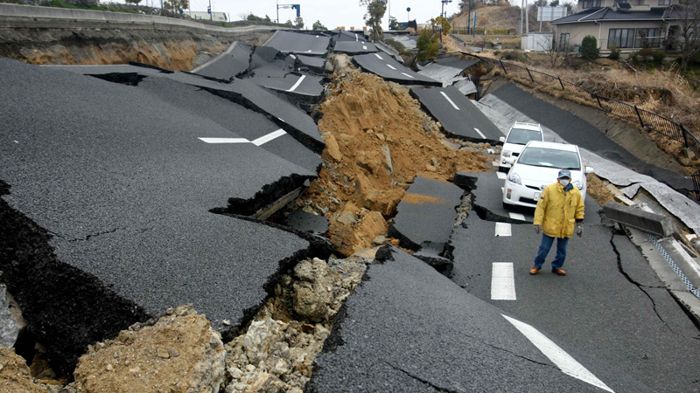
An earthquake is the shaking and vibration of the Earth’s crust due to movement of the Earth’s plates (plate tectonics). Earthquakes can happen along any type of plate boundary.
On average, Nepal has at least one major earthquake every 100 years. Major earthquakes can kill thousands of people and cause widespread destruction.
In 2015 Nepal suffered a very destructive earthquake, the epicentre was only 15 km below the Earth’s surface. Shallow earthquakes are more destructive because the seismic waves don’t lose much energy before they reach the surface. They are like bombs going off beneath the cities and villages above them.
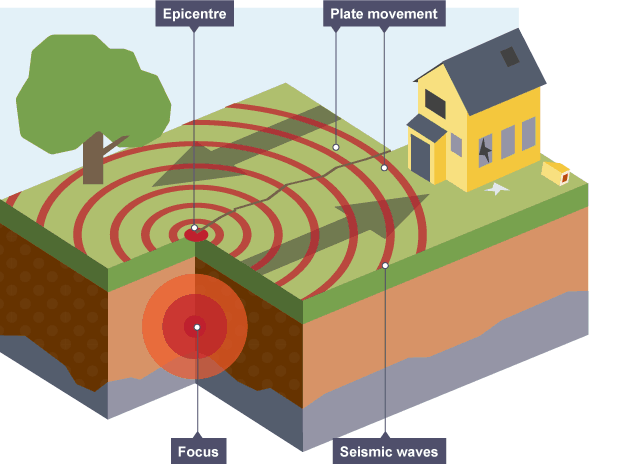
Earthquakes occur when tension is released from inside the crust. Plates do not always move smoothly alongside each other and sometimes get stuck. When this happens pressure builds up. When this pressure is eventually released, an earthquake tends to occur.
The point inside the crust where the pressure is released is called the focus. The point on the Earth’s surface above the focus is called the epicentre.
Earthquake energy is released in seismic waves. These waves spread out from the focus. The waves are felt most strongly at the epicentre, becoming less strong as they travel further away. The most severe damage caused by an earthquake will happen close to the epicentre.