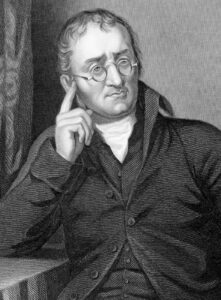
The idea that all matter is made up of tiny particles started over 2400 years ago. The Greek thinker Democritus called these particles ‘atomos’ In 1805 and English chemist called John Dalton published his atomic theory or model.
He said that: • All matter is made up of tiny particles called atoms • The atoms in an element are all the same but each element has different atoms • Atoms are indestructible – they can’t be made or destroyed • In compounds each atom of an element is joined to a fixed number of other elements • In chemical reactions atoms rearrange to make new things.
John Dalton’s atomic model said that all atoms in an element are identical but different elements are made from different atoms. The difference in these atoms gives each element its own properties or behaviours. Examples include:
Colour
Melting Point
Boiling Point
Density
Strength
Flexibility
Conduction of heat
Conduction of electricity
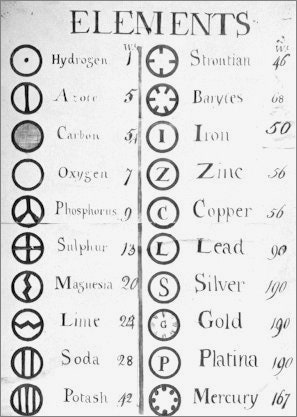
To show different atoms John Dalton introduced symbols to represent them. We still use symbols today but these are now one or two letters e.g. O for Oxygen and Ca for calcium. These symbols are used across the world so that everyone can understand the same chemical formula.
When there are two letters, the first is always a capital and the second is always a lower case letter for example Ne for Neon and Ca for Calcium.
Some elements have letters that are not related to their name like Au for Gold and Fe for Ferrous. This is because they come from the latin or greek names for some of the elements like Ferrous and Aurum.
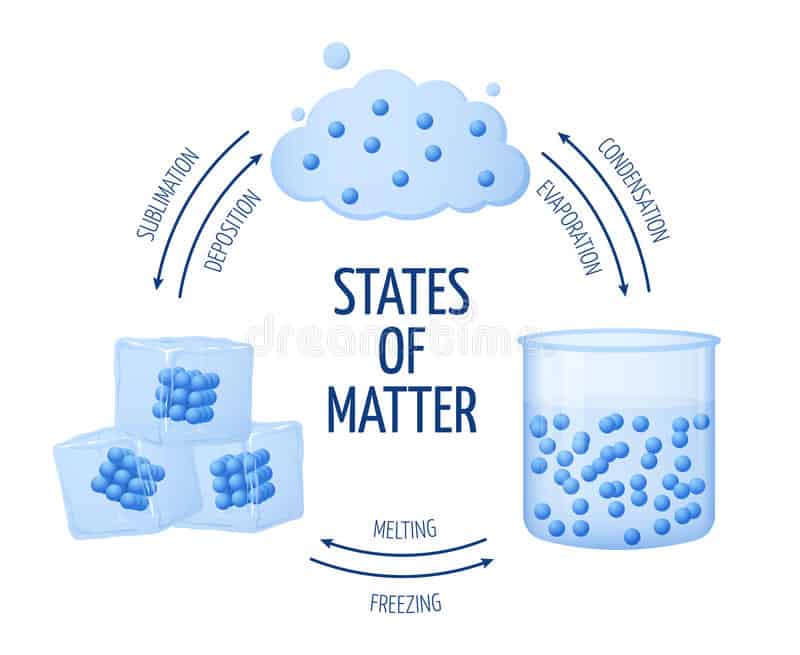
The diagram shows the particles that are found inside solids, liquids and gas. You have learnt about these before.
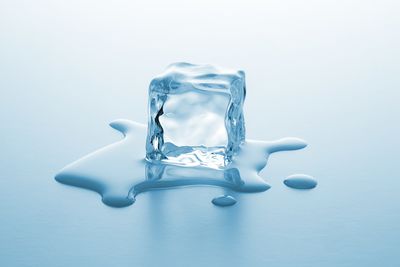
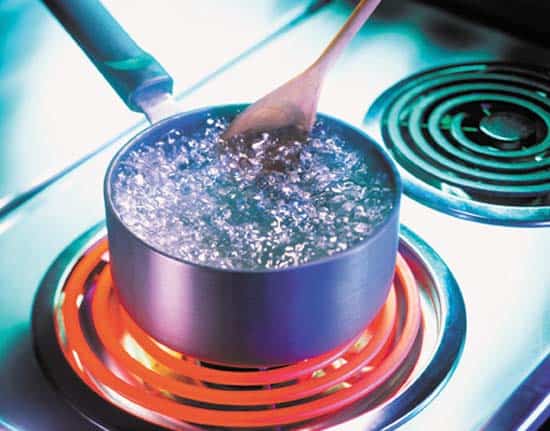
Physical changes like physical properties only involve one thing. The changes are often reversible like changes of state watch the video to refresh your memory.