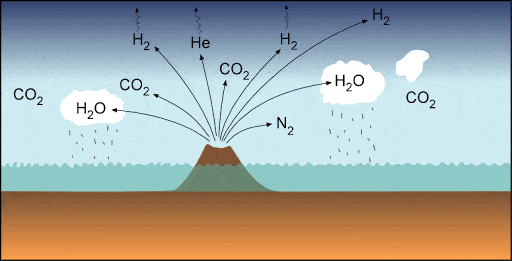
The Earth’s early atmosphere is thought to have been mainly carbon dioxide with smaller amounts of water vapour and other gases, and little or no oxygen.
Volcanoes affect the atmosphere by releasing large amounts of gases like carbon dioxide and water vapour
There was a lot of volcanic activity on the early Earth
The Oceans
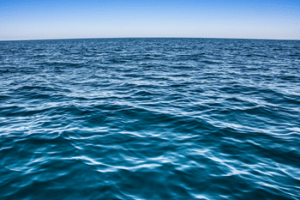
About 4 billion years ago the Earth cooled down. This caused water vapour in the atmosphere to condense and form the oceans.
Many scientists think that carbon dioxide then dissolved in the oceans, reducing the amount of carbon dioxide in the atmosphere
Sea creatures used the dissolved carbon dioxide to form shells made of Calcium Carbonate (CaCO3)
This then allowed more CO2 to dissolve in the oceans
There is evidence to support that there was no oxygen in the early atmosphere
Oxygen is not produced by volcanoes
Iron pyrite only forms when there is no oxygen and is often found in ancient rock
About 2.4 billion years ago rocks containing bands of iron oxide started to form. This suggests that oxygen levels increased at this time
There is fossil evidence of microorganisms that may have produced oxygen
Organisms that photosynthesise change the atmosphere because it uses up carbon dioxide and produces oxygen
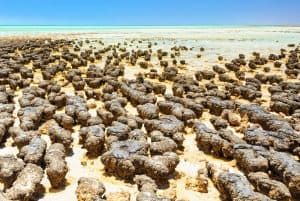
Some of the earliest photosynthetic organisms were cyanobacteria that live in shallow water.
Cyanobacteria help to make stromalites, some of which are over 3 billion years old. They show that photosynthetic organisms were living at this time.
Organisms like these caused the rise in oxygen levels in the atmosphere