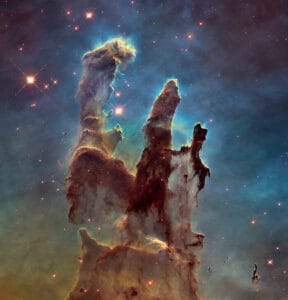
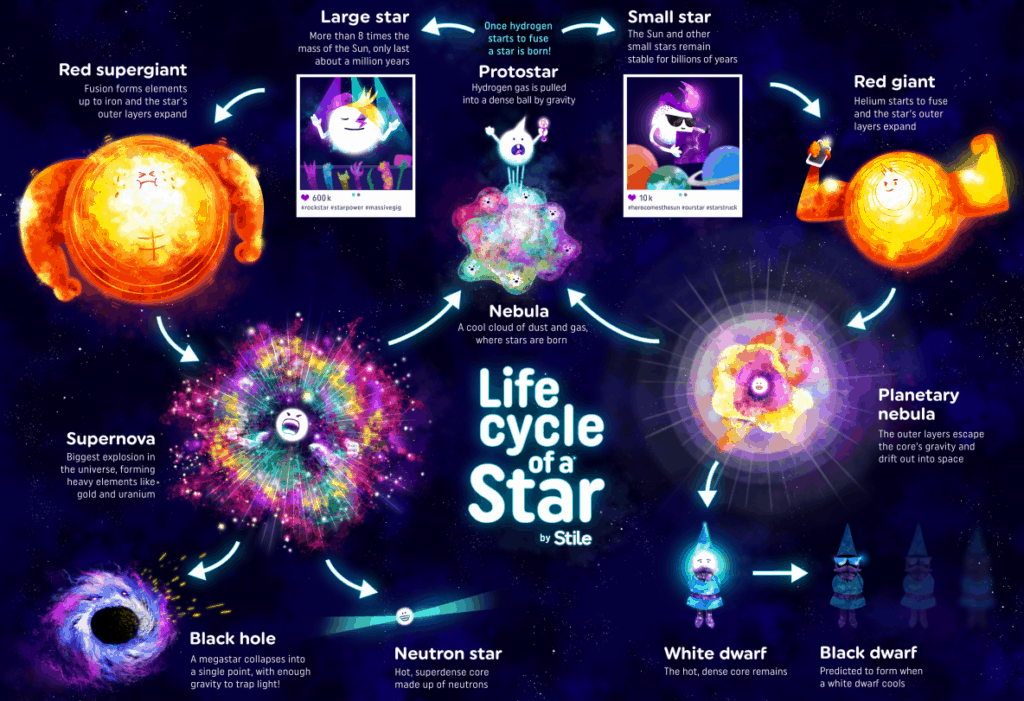
Stars including our very own sun, form when enough dust and gas from space is pulled together by gravitational forces.
This results in the formation of nebula like the picture here.
Such a cloud is typically 75% hydrogen and 24% helium.
Main Sequence Stars
As the gravitational pull becomes stronger there is immense heat. Before a star releases it’s own energy it is called a Protostar.
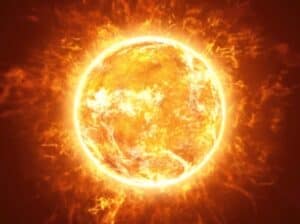
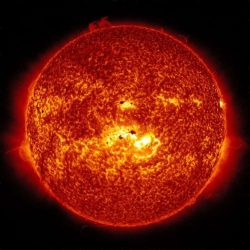
Eventually this results in nuclear reactions taking place releasing massive amounts of energy. This produces immense heat and energy which stops the star collapsing under its own gravity.
Red Giants
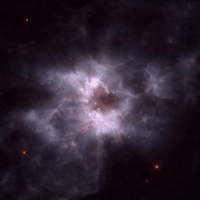
RED GIANTS continue to cool down and collapse under its own gravity to become a white dwarf. The matter left behind will then be millions of times denser than any matter on Earth.
White dwarf
Red Supergiants
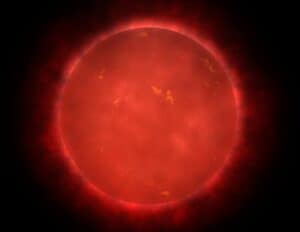
Stars that are four times as big as our sun will become RED SUPERGIANTS.
RED SUPERGIANTS rapidly shrink and explode releasing massive amounts of energy and dust and gas into space. At this stage the star has turned into a supernova.
The matter left behind from the explosion of a Red Super-giant (Supernova) may form a very dense neutron star. A cup full of this matter could have a mass greater than 15,000 million tonnes. Neutron stars are made of 100% neutrons.
Supernova
Neutron Star
Black Holes
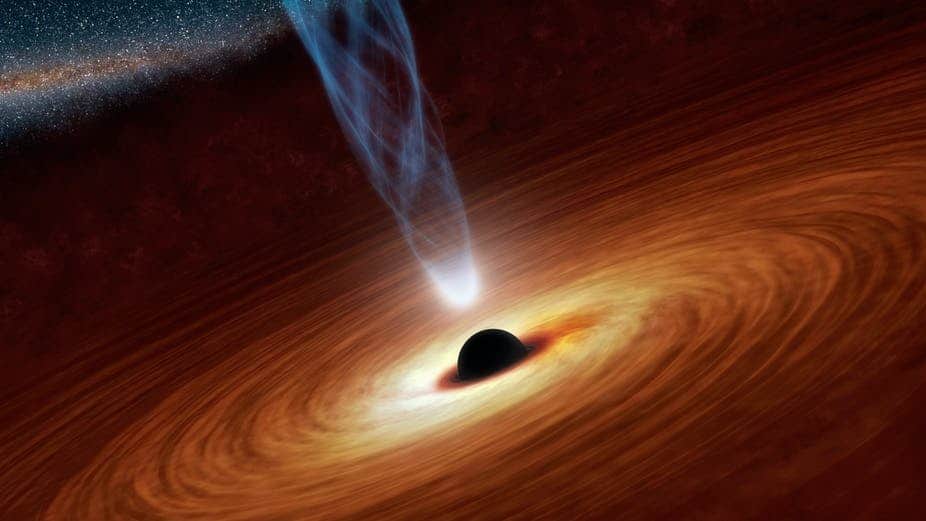
Stars that are greater than 10 times bigger than our own sun are massive enough to leave black holes. Here the matter and the gravitational pull are so strong that nothing can escape it – not even light or other forms of electromagnetic radiation.
Black holes can’t be observed directly because light cant escape its gravitational pull. They can be seen because of the effects they have on their surrounding environment.